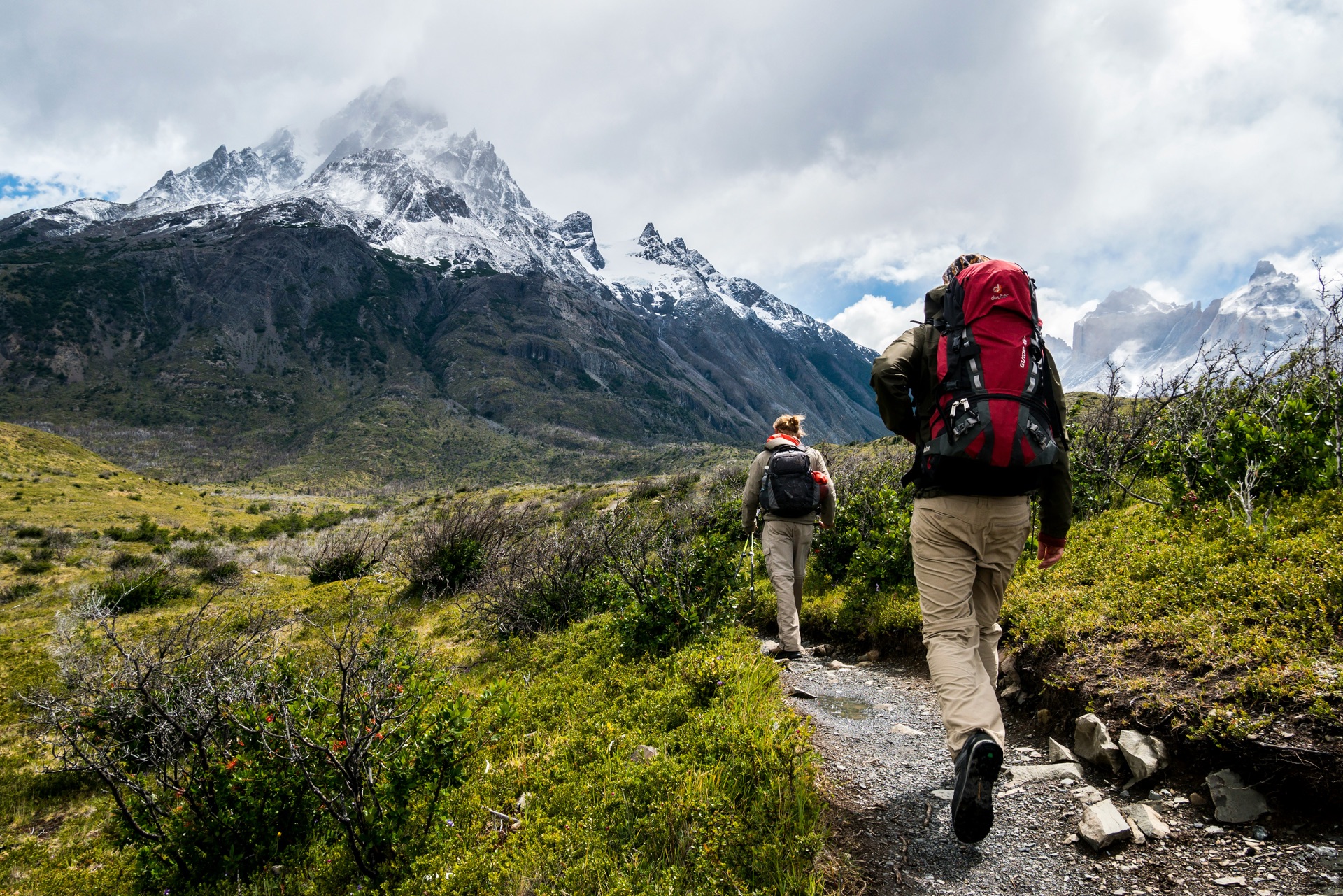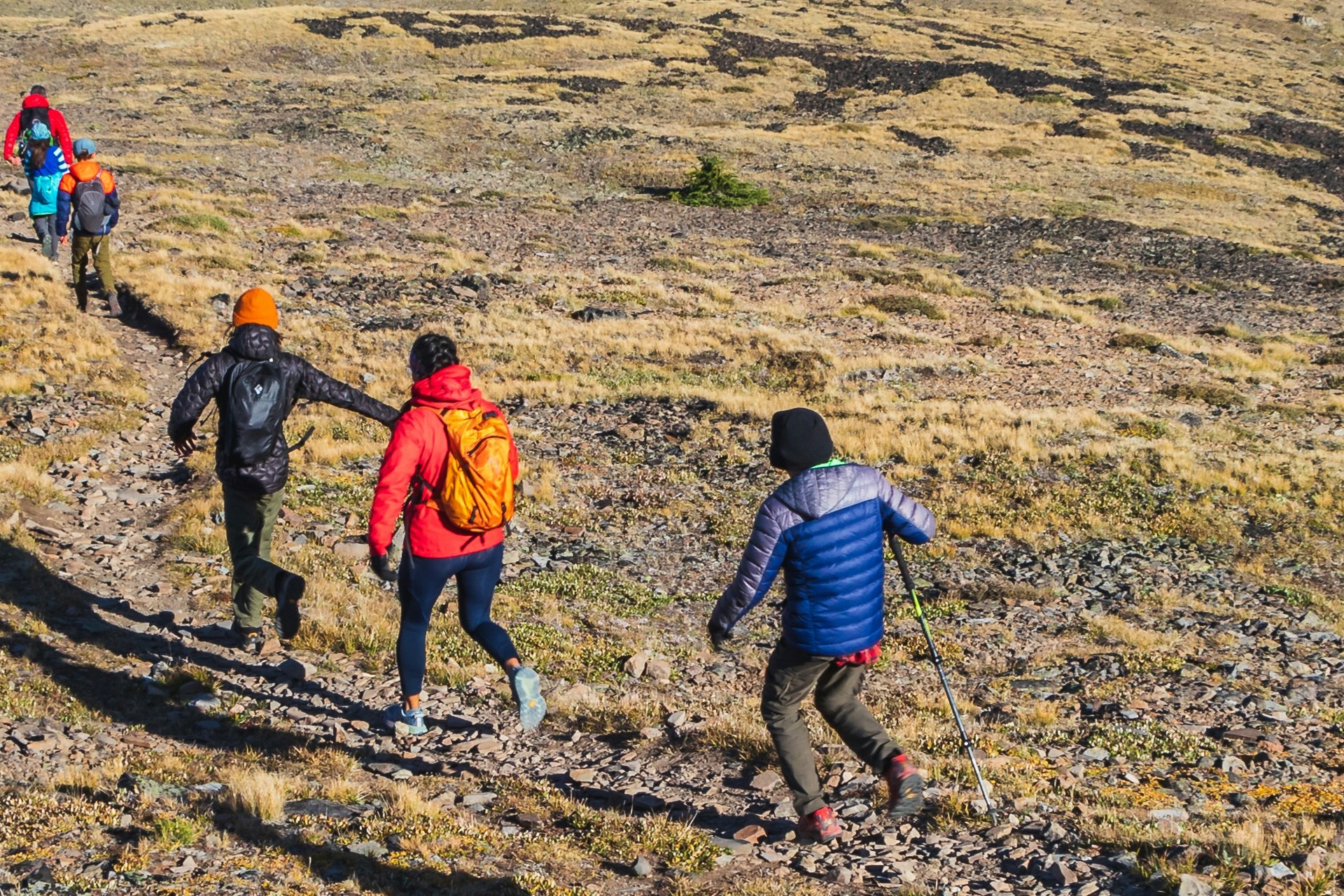
When we’re hiking in Colorado Springs, we typically think of the uphill as the only real challenging part of the hike. The downhill is an afterthought that we assume we will breeze through while daydreaming about what we’re going to have for lunch (anyone else?). However, if you have knee pain, you may end up paying quite a bit more attention to your descents.
As it turns out, your quads and knees are quite involved as you’re going downhill. I speak from experience, as I’ve personally given myself pretty severe knee pain hiking down from Turtlehead Peak in Nevada.
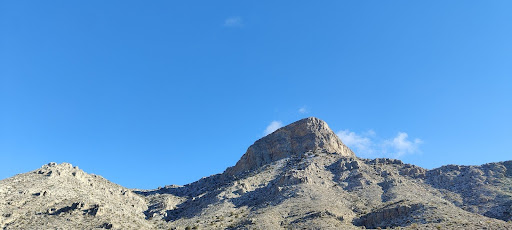
At least I got a nice picture for all my pain!
What actually happens when you hike downhill?
Every step downhill is a controlled fall that you need to manage with your quads. You can think of them like your brakes while driving down from the mountains near Colorado Springs. If you brake too hard and too often, you can warp your brake pads. If you do the same while hiking down a steep incline without the requisite strength, you can cause problems with your knees.
The specific type of motion/demand is called an eccentric load. The eccentric component of a muscle action is the part where your muscle is lengthening under tension. If you think about going down the stairs, your quad muscle is being stretched while being asked to control that stretch at the same time. This type of muscle engagement places the highest amount of tension through a muscle because there is the combination of passive stretching and active contraction of the muscle.
When done intentionally during a workout in Colorado Springs, this can generate the biggest strength gains because it places the largest stimulus on your muscles and tendons. However, when done repeatedly for long durations, it can crossover into legitimate pain and tendinopathy.
Why are your knees actually hurting when hiking?
Aside from the obvious causes of knee pain like inadequate strength or preparation for a hike, knee pain is more likely to occur during hiking for a few reasons.
- You just hiked uphill! While your quads are less used during uphill portions of the hike, they are still going to be fatigued. In addition, your whole body will be somewhat drained from that uphill hike. This “central” fatigue leaves less support for your quads on the descent and can make you less efficient once you get to the descent.
- You’re likely wearing a backpack. That added weight on your skeleton compounds the forces placed on your knees, increasing your risk of pain.
- Most hikers near Colorado Springs are walking fairly long distances, which creates a highly repetitive load. This is why you can go down a flight of stairs with no pain, but a 5 mile descent might leave you limping.
There are some other factors that may contribute to increased pain that are a bit more specific:
- Early season hikes after a winter of lower activity, leading to a deconditioned state
- Sudden jumps in elevation or mileage, which can overwhelm a system not accustomed to this intensity
- Multi day trips (made worse with more sleep in a tent!), resulting in poor recovery between hikes
- Hikers carrying heavier packs than usual (backpacking vs day hikes), leading to unfamiliar stresses on our knees.
How do we prevent this?
The good news is that we can specifically train for hiking so that both the downhill feels manageable and painfree. We want to do this by specifically loading our knees with eccentric-focused exercises that will simulate downhill hiking. However, we want to load up these exercises as much as possible rather than doing a million reps with a 1lb weight. Physical Therapy in Colorado Springs can also help with this.
This is because our tendons respond best to high forces, and your knee pain is likely patellar tendonopathy to some extent.
Here are some exercises you can try to address this on your own:
Lateral Step Downs
Controlled single leg step downs from a box train eccentric quad control in a way that mimics the demands of hiking down stairs quite well. You can hold a weight to increase difficulty.
Heel-Elevated Squats
A slight heel elevation increases the force on your quads and can be especially useful if you perform them with a tempo of 3s lower, 3s pause at the bottom, and 3s coming back up. This maximizes time under tension which helps build up your anterior knee structures.
Split Squats and Lunges
These are a great progression from a regular squat as they load up each leg more intensely. They will also have better carryover into hiking. However, these may be too intense to start with for some.
Loaded Farmer Carries and Step Ups
This simulates the demands of hiking with a heavier pack and can be a great way to build capacity without feeling like you’re setting your quads on fire with every exercise.
Downhill is a skill
There is also a technical component that we can control when descending on a hike to minimize stress on the knee.
Avoid overstriding: Overstriding (taking big, heavy steps) increases braking forces on the knee and your lower extremity joints in general. Taking smaller, more controlled steps can decrease joint stress if you are prone to pain with descending.
Avoid favoring one leg: You might have a conscious or unconscious preference for one leg when going down large steps or scrambles. Pay attention on your next hike and see how often you let your left vs. right leg lower you down the step. The one that stays on the step is the one doing all the work!
Trekking poles: Utilizing trekking poles can be a great way to offload force from your knees into your arms. For backpackers who don’t want to count grams and go ultralight, these are a lifesaver. However, they absolutely can make a difference on the right day hike. Ensure your poles are fitted correctly (shorter for uphill, longer for downhill) and sync their usage with your legs. Your right hand trekking pole should contact the ground at the same time as your left foot, for example.
When to be concerned
Some pain is okay to work through, but when you start having pain that is sharp, intensifying, and/or associated with swelling or instability, you should consider stopping your hiking and taking your rehab seriously. You may be able to solve it on your own with a short period of rest from hiking and some of the exercises I mentioned above. If you still can’t get back to doing the hikes you want to, consider reaching out to a sports physical therapist in Colorado Springs who can help.
We proudly serve active individuals in Colorado Springs, Manitou Springs, Briargate, Falcon, Rockrimmon, and surrounding areas.
📞 Call us today or 📧 book your evaluation to get started with Physical Therapy near Colorado Springs: (719) 285-9670