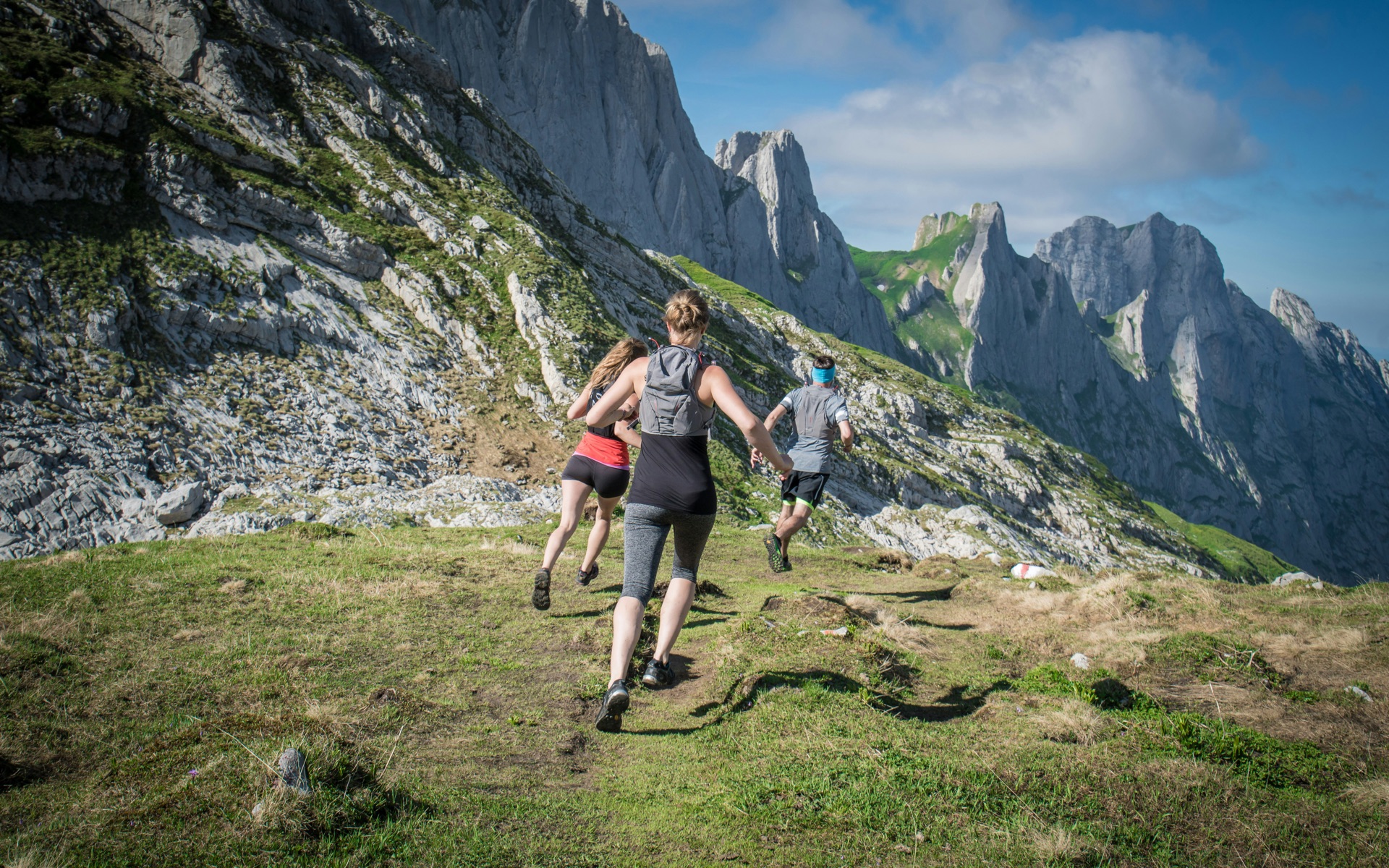
Running injuries in Colorado Springs rarely come from a single error in technique. Often, running form does not actually result in any injury and changing ones natural running style has no meaningful effect on a runner’s injury risk. However, some individuals do demonstrate deviations in their running form that are directly associated with pain. In these instances, it can be helpful for therapists to intervene to avoid overstressing the affected tissues. In nearly all cases, these deviations are associated with running cadence and are corrected by increasing one’s cadence.
Cadence, or step rate, refers to the number of steps a runner takes per minute. This can be measured with a smart watch or metronome, and is analogous to the beats per minute of a song. Increased running cadence results in more frequent, smaller steps, which are associated with decreased forces throughout one’s joints, muscles, tendons, and ligaments. For many runners dealing with pain, increasing cadence is one of the most effective means for improving form and reducing pain without overthinking multiple cues.

Why Cadence Matters
When cadence is low, runners near Colorado Springs tend to spend more time in the air and land with the foot farther in front of their center of mass. This increases braking forces and joint loading, particularly at the knee and hip. Over time, this pattern can contribute to common injuries such as patellofemoral pain, IT band irritation, and bone stress injuries.
Increasing cadence slightly reduces stride length. This brings the foot closer to the body at contact, which decreases impact forces and improves load distribution. It also reduces vertical oscillation, meaning less wasted energy and less repetitive stress. If you are bouncing up and down when running, you are wasting energy and would likely benefit from this intervention.
In clinical practice, this is one of the few interventions that can create immediate, measurable changes in running mechanics without requiring retraining.
The Common Mechanical Faults That Cadence Addresses
Overstriding
Overstriding is one of the most common contributors to running pain in Colorado Springs. It occurs when there is a large stride length, resulting in the foot landing too far in front of the body. This results in a large braking force with each step. It is also often associated with vertical oscillations (or a bouncy stride), resulting in greater forces as you are landing with each step.
As stated before increasing cadence naturally shortens stride length. As cadence rises, the foot tends to land closer to the center of mass, reducing braking forces and decreasing stress on the knee and tibia.
Narrow Step Width
A narrow step width can lead to excessive crossover, where the foot lands close to or across the midline of the body. This can increase stress on the hips and knees, particularly on the lateral structures like your IT band.
Higher cadence often encourages a slightly wider and more stable base of support. With quicker turnover, runners in Colorado Springs spend less time in single-leg stance, which reduces the tendency to collapse inward or cross over excessively. This can improve alignment without needing to consciously think about foot placement.
Pelvic Drop
Pelvic drop, or contralateral hip drop, has often been associated with hip weakness or poor control, but recent research suggests that hip strength does not influence this running deviation. Instead, it is likely that cadence is the primary driver of pelvic drop.
Increasing cadence reduces ground contact time. With less time spent on each leg, there is less opportunity for the pelvis to drop excessively. This does not replace the need for strength training, but it can immediately reduce the mechanical stress associated with poor control.
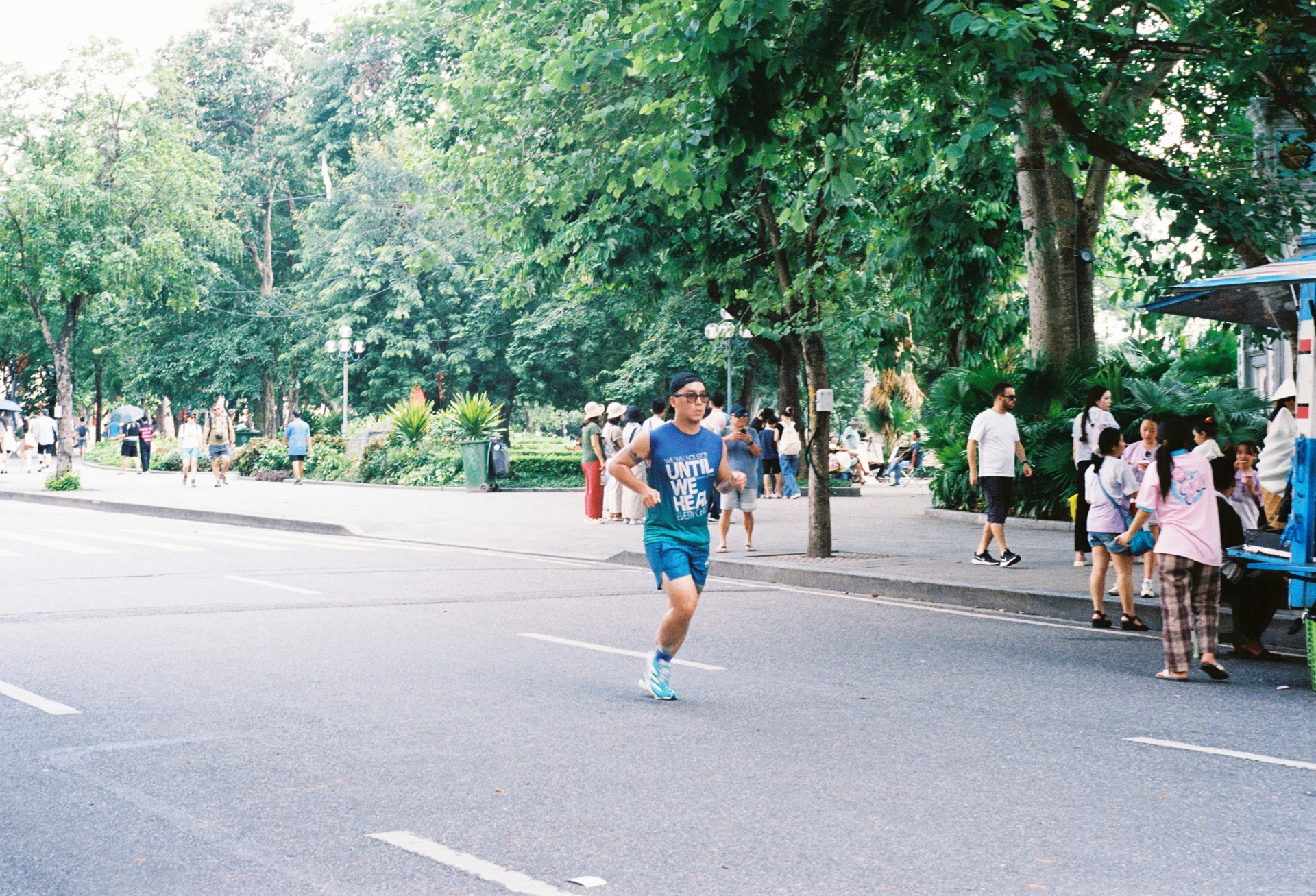
What Is an Ideal Running Cadence
There is no single perfect cadence that applies to every runner. Factors like height, leg length, and running speed all play a role.
That said, most recreational runners fall somewhere between 150 and 170 steps per minute. A commonly cited target range is 170 to 180 steps per minute, but this should not be treated as a rigid rule.
Instead of chasing a specific number, it is more useful to think in terms of relative change. Research and clinical experience both support that increasing cadence by about 5 to 10 percent from a runner’s natural baseline can significantly reduce joint loading and improve mechanics.
How To Increase Cadence Effectively
The key to changing cadence is to do it gradually and naturally. Forcing a dramatic change can feel awkward and is not likely to stick.
Step 1: Measure Your Baseline
Run at your normal pace and count how many steps you take in one minute or match a metronome to your cadence. This is your starting cadence.
Step 2: Increase By 5 To 10 Percent
If your baseline is 160, aim for 168 to 176. Stay on the lower end initially.
Step 3: Use a Metronome
A metronome app or playlist with beats per minute can help guide your step rate. Match each foot strike to the beat. This provides an external cue that reduces overthinking.
Step 4: Apply It In Short Intervals
Start by practicing the new cadence for 1 to 2 minutes at a time during runs. Gradually increase the duration as it begins to feel more natural.
Step 5: Let The Mechanics Adapt
Avoid layering multiple cues like “don’t overstride” or “keep your hips level.” Increasing cadence often cleans up these issues automatically. Trust the process and allow your body to self-organize.
Clinical Takeaways
Modifying cadence is one of the most effective tools for addressing running-related pain near Colorado Springs. It influences multiple aspects of running mechanics at once, often without the need for complex instruction.
For runners dealing with pain, a modest increase in cadence can reduce joint loading and reduce strain on the affected tissues. It is not a replacement for strength training or proper load management, but it is a powerful adjunct to both.
From a rehabilitation standpoint, it offers a low-risk, high-reward intervention that can be implemented immediately. For many runners in Colorado Springs, it is the simplest way to run with less pain and more efficiency.
We proudly serve active individuals in Colorado Springs, Manitou Springs, Briargate, Falcon, Rockrimmon, and surrounding areas.
📞 Call us today or 📧 book your evaluation to get started with Physical Therapy near Colorado Springs: (719) 285-9670