When talking about on the job injuries, most think about construction accidents or people getting hurt lifting heavy boxes all day. It’s true! Those types of occupations can be very hard on your body and lead to chronic pain.
We live in a world where many people have sedentary jobs. People work in offices in Colorado Springs and at computers for most of the day. The Bureau of Labor estimates that over 18 million people in the United States have office jobs. For example, here in our community of Colorado Springs, we have many jobs tied to military contracts and colleges where people are working at computers. This leads to a whole variety of potential orthopedic problems that differ from the manual labor occupations.

Why a Standing Desk Could Benefit You
Sitting too long and looking at computer screens leads to back pain, neck pain, wrist and elbow problems, tight hip flexors…so many kinds of problems! Our bodies were made to move. Being in one position for so much of the day completely contradicts that intention.
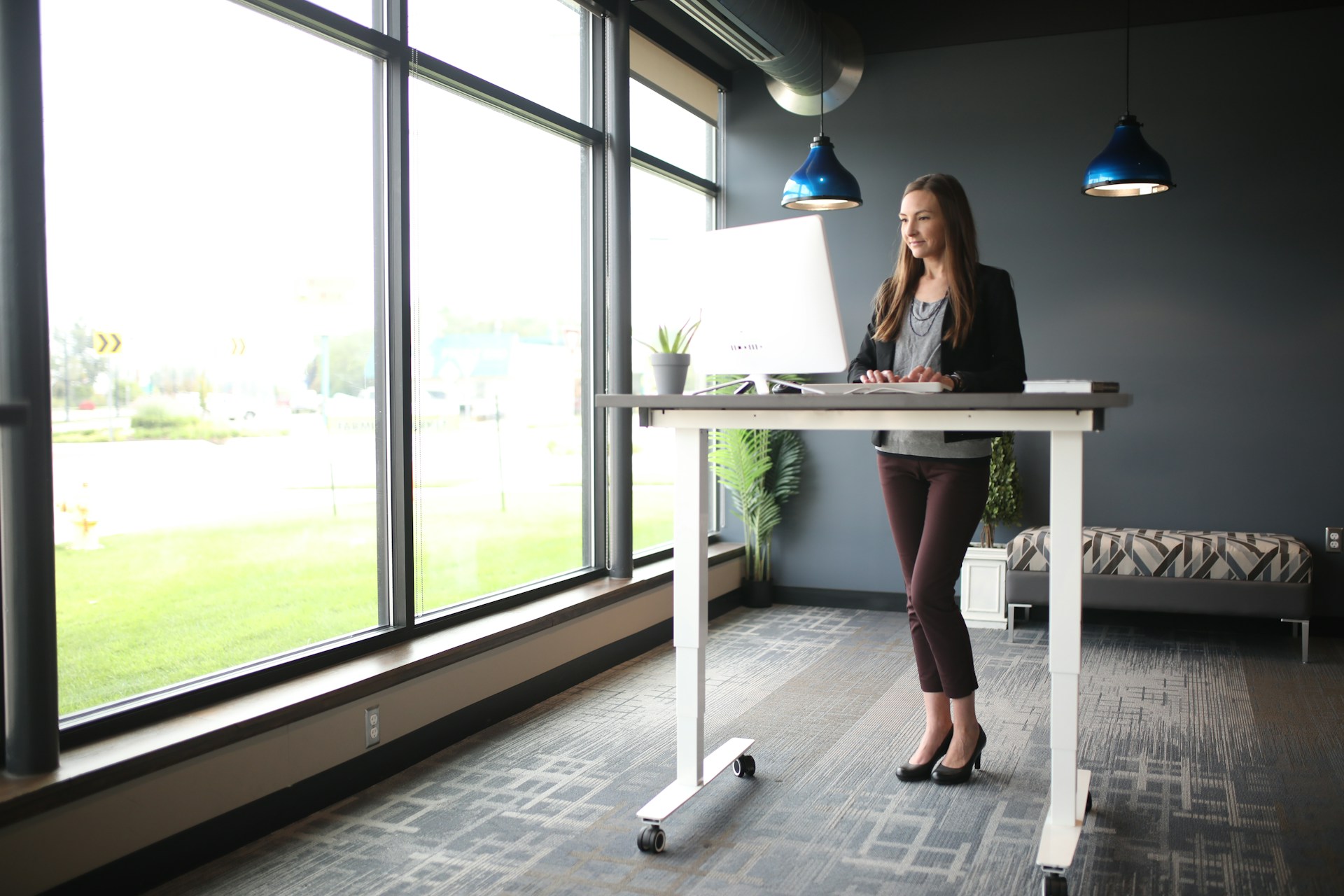
We have become huge proponents of using a standing desk at work. This gives you more ability to create a different environment throughout the day. The following are some tips on using a standing desk properly.
How to Make Use of Your Standing Desk
-Don’t set up in the standing position for the entire day. I typically encourage people to switch between sitting and standing every 30-60 minutes. Try standing for shorter periods of time in the beginning and stretching that out as you become more used to standing.
-Adjust your body weight while standing. If you stand flat footed the entire time you are standing, that isn’t the most ideal situation. Try moving more body weight toward one foot or the other. Prop one foot up on a small box or stool. Things like this help give you more variety in your movement and distribution throughout the day.
-Maintain your principles of good ergonomic equipment placement. You want a desk height that naturally lets you place your elbow about 90 degrees of bend while using your mouse or keyboard. Your screen height should not be too high or too low. Try to keep the top of your computer screen slightly below eye level.
-Still take some time to stretch and move your upper body during your work session. Avoid upper back (thoracic) pain by stretching, squeezing your shoulder blades together, etc.
Physical Therapist in Colorado Springs Final Thoughts
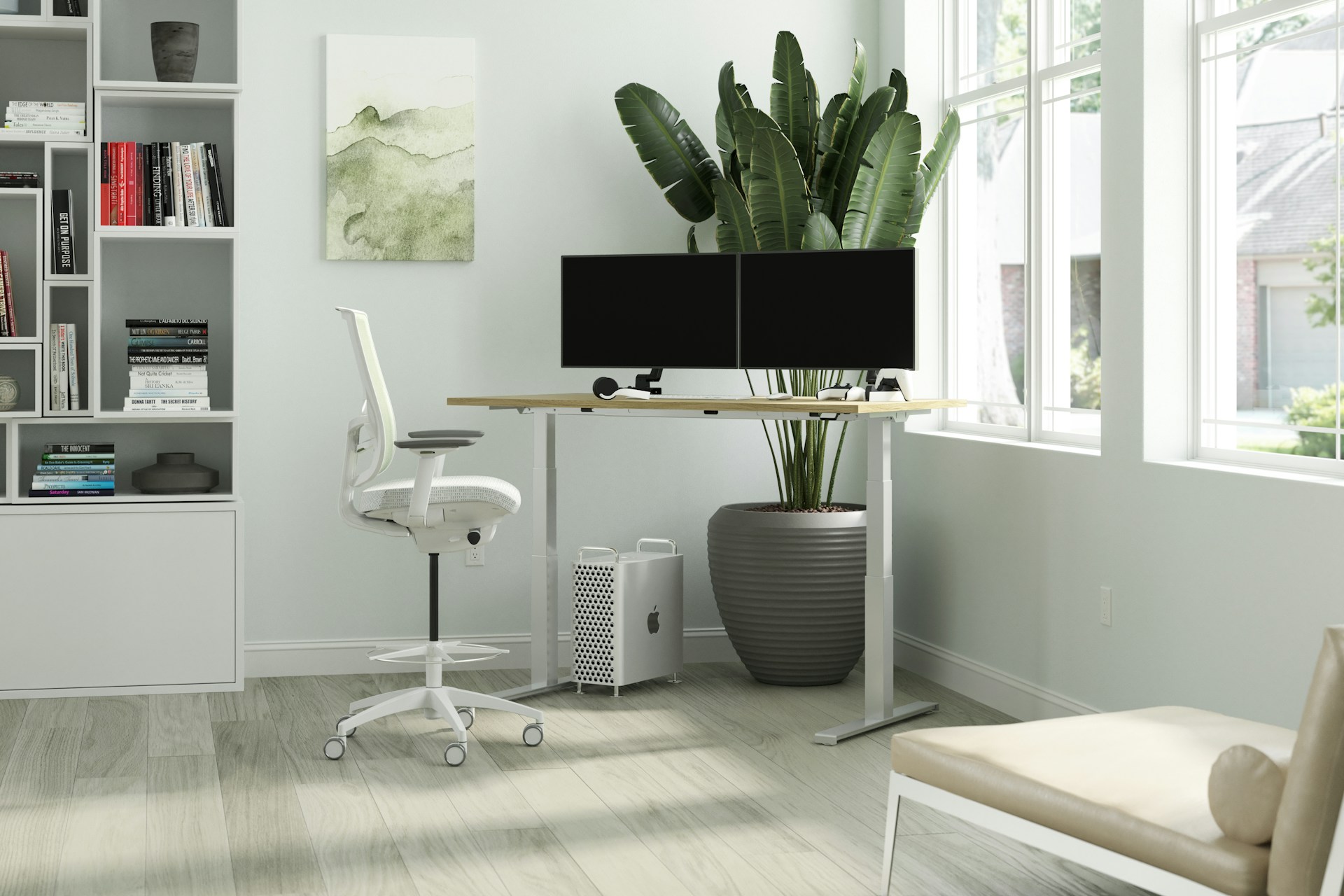
Standing desks are an amazing tool to help your physical therapist near Colorado Springs keep you fit and healthy. The variety in movement and positions are how our bodies are designed to live. We often see where an office job compounded with a preferred physical activity that also involves a large amount of sitting (think mountain biking, kayaking, etc) compounds the negative effects of sitting. We tend to see very tight hip flexors, weak glutes, and the like.
Add in the other benefits of standing desks like improved mood and energy levels, you can see why standing desks are becoming so popular for our nation’s desk-based workforce. We would love to help guide you through the process of deciding whether a standing desk is right for you. At Backcountry Physical Therapy in Colorado Springs, we help our patients in the Pikes Peak region every day. With the right standing desk and the proper list of rehabilitative stretches and strength exercises, you can lower your risk for pain and injury!
We proudly serve active individuals in Colorado Springs, Manitou Springs, Briargate, Falcon, Rockrimmon, and surrounding areas.
📞 Call us today or 📧 book your evaluation to get started with Physical Therapy near Colorado Springs: (719) 285-9670