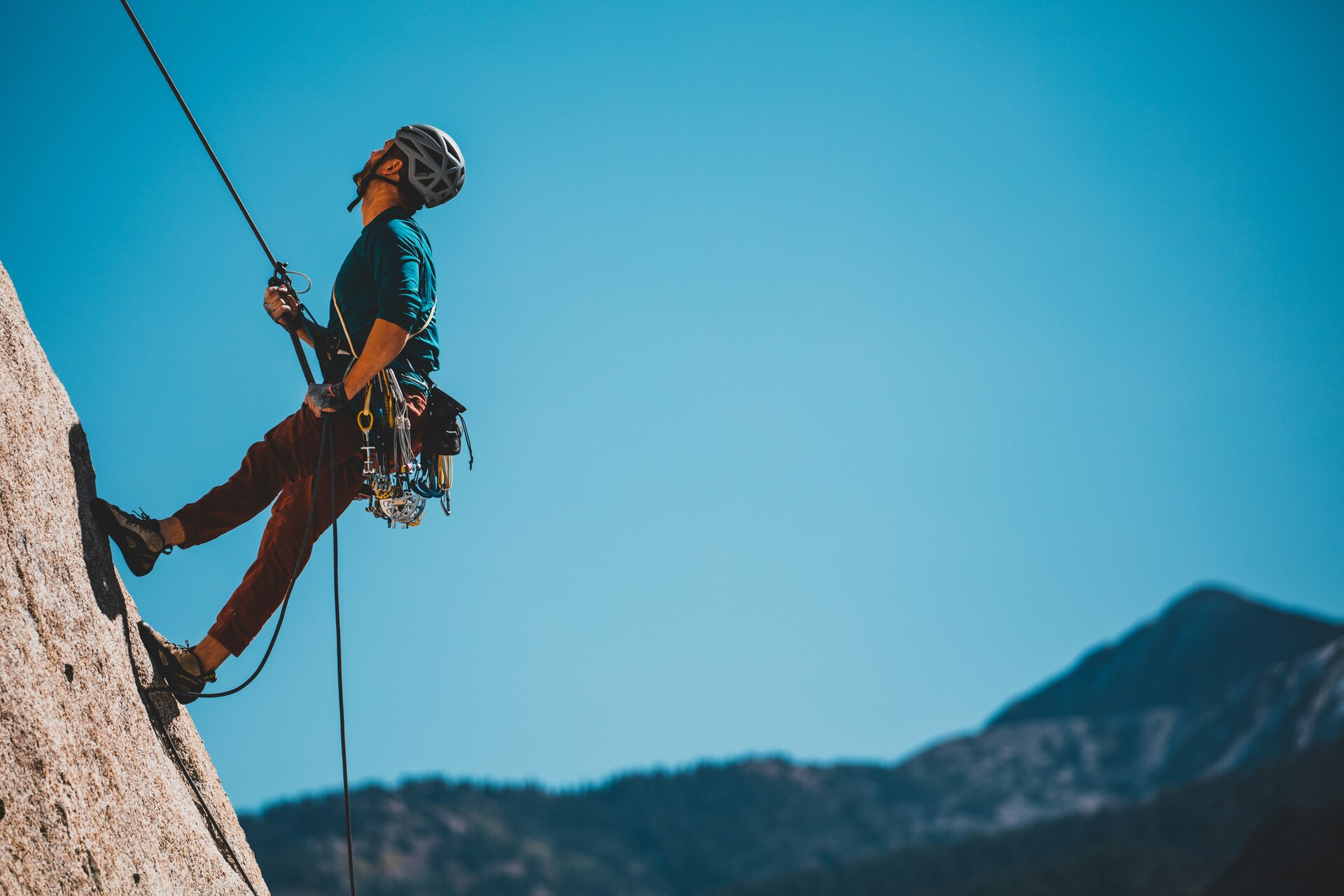
Rock climbing in Colorado Springs has grown greatly in popularity over the last few years, which has also resulted in an increase in rock climbing injuries. While rock climbing is perfectly safe when done correctly, it is still a very intense sport that places a high degree of stress on multiple joints in our bodies.
Weight lifting is included as an essential part of any athlete’s training due to its potential to improve performance and prevent injury, but it has not been widely adopted by many climbers. The old adage of “Just climb more” is often the advice climbers receive, and it is insufficient if you care about your health and your ability to climb harder. This is where physical therapists in Colorado Springs are here to help.
Rock climbing is intense! But where is it affecting you?
Rock climbing is touted as a full body workout and for good reason. It manages to work everything from your toes to your fingers and everything in between. However, there are a few places where climbers are tested the most when they are on the wall.
Fingers:
This one is obvious, but the stresses of climbing are unlike anything most of us experience in day-to-day life and can lead to significant finger pain or torn tendons in the worst case.
Wrists/forearms:
Source of the infamous “pump” we all get at the least opportune times. Our forearm muscles are often an extension of our fingers and are used for maintaining our grip. Depending on the types of climbs you do, these muscles can get strained quite easily given the weird positions climbing forces us into.
Shoulders:
Our rotator cuffs and scapular stabilizers are essential in climbing, as they are what anchors our arms to our torso. You will notice these the most with overhangs and especially dynos. If these are weak, you will be defeated by all of the “muscley” climbs you encounter!
Hips/knees:
If you’ve climbed near Colorado Springs more than a few times, you’ve probably heard how important it is to rely on your legs rather than your arms. Our hip flexibility and strength can be a great asset, or a huge liability when solving problems on the wall. Hip mobility unlocks moves we never thought were possible, and hip/knee strength ensures we can pull off heel hooks without exploding our hamstrings. Our quads and glutes are essential for those huge step ups we sometimes encounter, and can make or break your ability to progress past the easier grades.
Core:
We can’t forget the core! While our core is less likely to be injured, it can be the deciding factor for certain types of climbs. If you love overhanging routes like me, you know that your core is the only way to keep your feet on the wall at times. Beyond V3, you are going to struggle without a strong one!
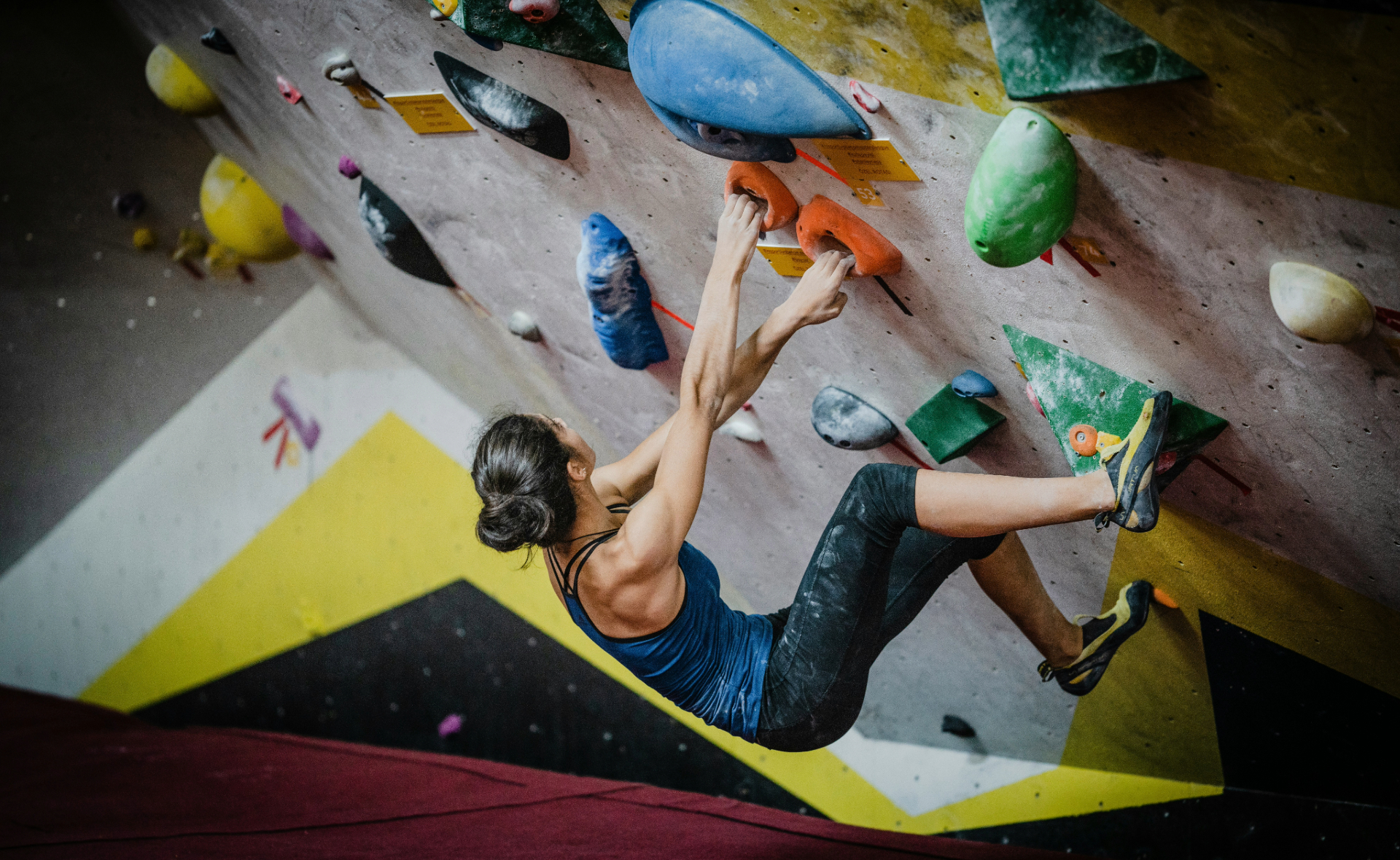
Working toward pain relief in active individuals in Colorado Springs.
That sounds great, but how am I supposed to lift weights and find time for climbing?
Despite what I said earlier, there is some truth to “Just climb more”. Climbing is first and foremost a skill sport. You will not get better without practice and dedication to being on the wall. With this in mind, we want to ensure our strength training near Colorado Springs is supplemental and not directly impairing our climbing sessions. So how do we do this?
Intelligent Programming- the best friend of any athlete
Intelligently planning your weekly, monthly, and even yearly workout schedule is your best strategy for maximizing progress if you want to be the best climber you can be. This can be done with a physical therapist near Colorado Springs to plan out the best course of action for you.
On a weekly basis,
you should spread out your climbing sessions when possible to allow for adequate rest (no more than 3-4 sessions per week!), with your weight lifting scheduled either after your climbs, or on non climbing days. This will ensure you get the necessary strengthening without killing your climbing practice or risking over training in Colorado Springs.
Over the course of a month or multiple months,
you should be thinking in terms of training blocks. A training block is essentially a commitment of 1-3 months where you are focusing on one particular aspect of your performance. This could be climbing performance, or building a reservoir of strength in your “off season”. You may have goals of improving your slab climbing or overhangs, or you just really want to send that 5.12 that has been bugging you.
Whatever your goal is, remember this popular quote from Dan John: “The goal is to keep the goal the goal.” Don’t get distracted! If you succeed, take 1-2 weeks at the end of each block for a deload week to rest and recover. This will prevent overuse injuries and degrading performance before they occur.
Finally,
you should decide over the course of your year what you will do with each “season” of your training. Performance occurs in peaks and valleys, and you need to decide when you care about being your best. For competitive climbers, this is when your big comps occur. If you are an outdoor climber, this is when conditions for your project are ideal. For multi sport athletes, your peak will be when you actually plan to climb!
Thinking in this way will help you organize your training year and let you decide when it is time to lift heavy and get strong as your main goal. Every sport should have an offseason and every athlete should maximize that time. Spending 1-3 months lifting weights in Colorado Springs as your primary goal will help you to bank that strength and apply it when it counts. Contrary to popular belief, your muscles will not evaporate after a few weeks or even months if you have taken the time to build them properly.
I’m sold! Now what the heck do I do?
Choosing which lifts to commit to is crucial for maximizing your time and ensuring you can adequately recover between workouts. Because weight lifting is secondary to climbing, we want to pick exercises that will provide the most bang for our buck in the shortest amount of time. These will typically be the heavy hitter, multi-joint lifts with a focus on high weight and low reps. These are my top picks for climbers, but they will benefit almost any athlete who wants to stay injury-free.
Deadlifts:
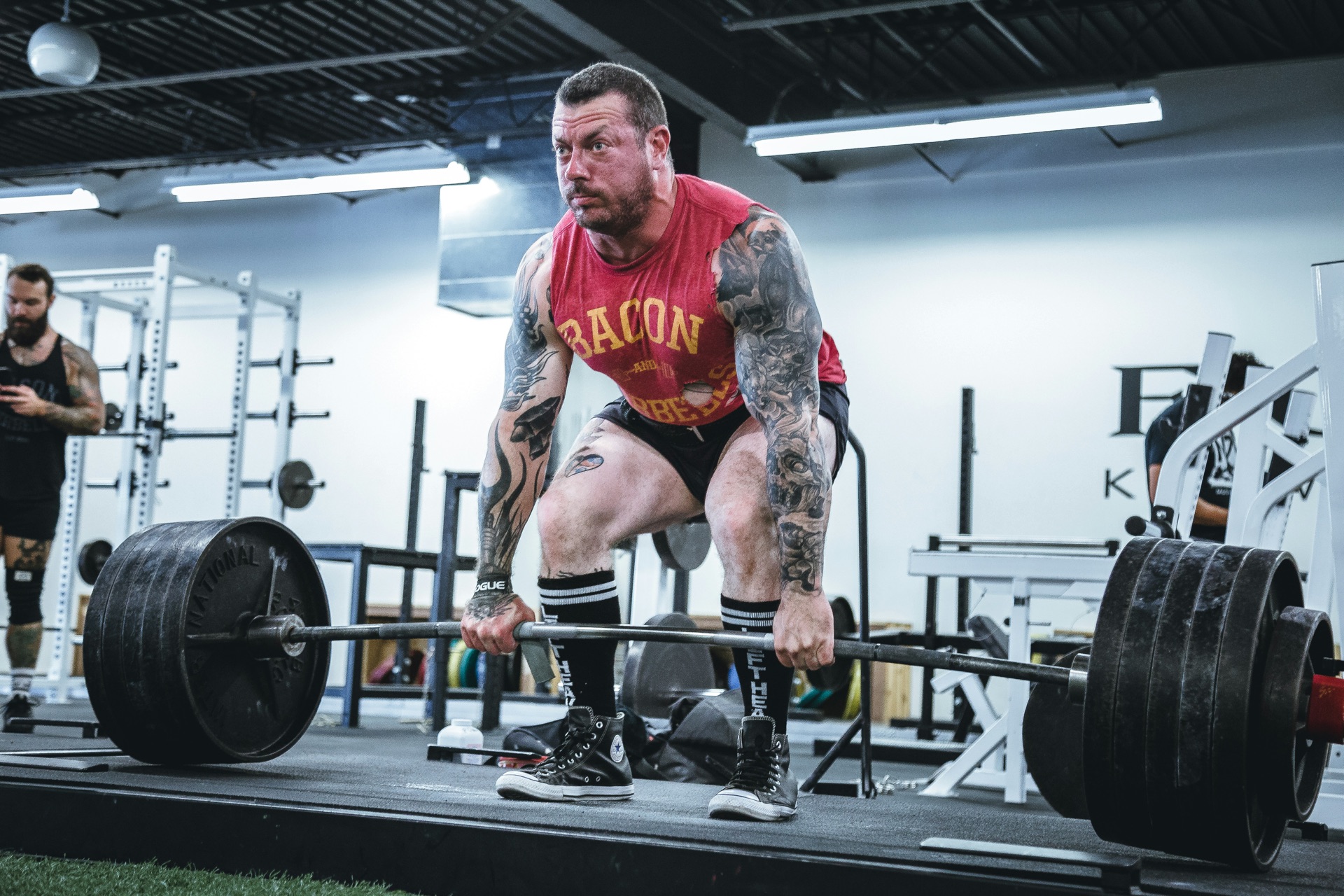
My personal favorite. Deadlifts will rocket your grip strength, core strength, leg strength, and back strength while helping you to protect your back when you fall. These are the secret to keeping your feet on the wall when climbing upside down. Don’t be afraid to go heavy–you are stronger than you think! A good target is being able to lift 1.5 times your body weight at least one time.
Squats, lunges or pistol squats:
Want to feel like you can actually step up on that chip that’s at your shoulder height? You need strong legs to do that on one leg! Pistol squats are great practice if you don’t have equipment, but barbell squats will help build the best raw strength.
Pull ups and rows:
If you notice you can’t drag yourself to the next hold with your arms or stay close to the wall, these exercises are great to give you that necessary strength. For those who are already quite strong with this, it may not be as necessary to add extra pull ups if you are climbing regularly near Colorado Springs.
Overhead press and bench press:
Climbers in Colorado Springs naturally overutilize their back muscles due to the demands of the sport, so it is easy to become imbalanced and create a potential for injury. Doing these two “pushing” motions will ensure you are keeping your shoulders strong and healthy, while also making mantles a breeze.
Hangboarding:
For the more advanced climbers who have begun to plateau or those with nagging finger pain, hangboarding can be a great way to bullet proof your hands. This is essentially an isometric exercise that can greatly improve your ability to handle tiny crimps or any hold you encounter. A simple routine is to hang for 7 seconds and rest for 53 seconds for a total of 5 reps on a 20mm edge. Once this gets easy, you can increase the reps or add weight with a dip belt.
Planks:
Love ‘em or hate ‘em, planks are a staple in many workout routines for a reason. They will help with your core’s endurance and ensure you don’t lose tension with those harder moves on the wall. If you can make it 60 seconds comfortably, consider plank variations like banded rows while holding a plank.
Resisted Shoulder External Rotation:
If you are having issues with your rotator cuff or want to ensure you don’t, these can be a great way to supplement the above exercises. Doing them at 90 degrees of abduction will simulate the demands of the sport better and are my recommendation if you can tolerate it. Dumbbells or bands work great for this. They are also a nice warm up if you have had nagging pain.
Bringing it home
Training like an athlete can be complicated, so I’ll try to simplify it here. Pick 3-6 of the above exercises to do 1-2x/week during a performance season, and 3-4x/week during a strength season. Make sure your lifting sessions are after your climbing practice, or at least don’t interfere with it. Try to increase the weight or reps over the course of each training block of 1-3 months, and don’t skimp on your rest. There is no substitution for it!
Weight lifting is the cornerstone of every serious athlete’s training, and climbers are no exception. It will improve your performance and help prevent injuries that will keep you out of the gym. Climbing is a full body workout that can be supported in a number of ways, so choosing the right exercises is essential.
Looking for more?
If you like what you read and want a skilled physical therapist in Colorado Springs to guide you through this process or help with an injury that won’t go away, the best solution is to schedule an evaluation with a specialist who knows your sport and will work with you personally to help you meet your goals.
We proudly serve active individuals in Colorado Springs, Manitou Springs, Briargate, Falcon, Rockrimmon, and surrounding areas.
📞 Call us today or 📧 book your evaluation to get started with Physical Therapy near Colorado Springs: (719) 285-9670