Whether you’re carving down Breckenridge, Keystone, or Vail, skiing demands strength, stability, quick reaction time, and precise control. For female skiers, especially those who ski hard and ski often, ACL injuries remain one of the most common and devastating setbacks.
At Backcountry Physical Therapy, we work with Rocky Mountain athletes every day: skiers, snowboarders, trail runners, mountaineers, climbers, hikers, and active Coloradans who want to move better and stay injury-free. Every winter, there is a similar pattern: women tear their ACL at significantly higher rates than men.
But why? And more importantly, what can you do to protect your knees with physical therapy in Colorado Springs before your next ski season?
We will break down the science behind ACL injury risk in female skiers, the common contributing factors, and evidence-based strategies to dramatically reduce your chances of getting injured on the mountain.
What the ACL Does and Why Skiers Need It
The ACL (anterior cruciate ligament) is one of the four major ligaments that stabilize the knee. Its main roles include:
- Preventing the tibia from sliding forward
- Providing rotational stability
- Helping control knee alignment during landing and cutting
- Supporting quick directional changes
Skiing stresses the ACL in multiple ways:
- Twisting falls
- Caught ski edges
- Sitting back or losing balance
- Rotational load during turns
- Landings from jumps or drops
In other words, skiing is basically the perfect storm for ACL strain.
If you’re a female skier, that storm is even more intense.
Why Female Skiers Are More Likely to Tear Their ACL
ACL injury risk is never about one single factor; instead, it’s a combination of biomechanics, physiology, strength patterns, technique, and equipment design. Here’s what the research shows.
Incorrect setup = higher ACL strain.
Anatomical differences make the ACL more vulnerable
Several structural differences between male and female knees contribute to higher ACL risk:
Wider Pelvis = Increased Knee Valgus
A wider pelvis changes the angle at which the femur meets the knee. This can make women more prone to:
Knee collapse inward (“valgus position”)
Increased strain on the ACL during turns or landings
Poor force absorption under fatigue
Smaller ACL Size
On average, the female ACL is smaller in diameter, which means:
Lower tensile strength
Less capacity to withstand strong torque and twisting
Increased Tibial Slope
A steeper tibial plateau surface increases the forward slide of the tibia, something the ACL must work harder to control.
Hormones influence Female Skiers ligament laxity
Estrogen and relaxin, hormones that fluctuate throughout the menstrual cycle, can affect ligament tension. Higher levels may increase laxity in the ACL, meaning:
The ligament becomes more “stretchy”
Joint stability decreases
ACL fibers become more vulnerable to load
Studies show ACL tears are more common during certain phases of the menstrual cycle when ligament laxity is higher.
Differences in neuromuscular control
Female athletes are more likely to demonstrate movement patterns that overload the ACL:
Less hip recruitment
Delayed glute activation
Quadriceps dominance
Greater reliance on passive structures (like ligaments)
Poorer hamstring-to-quadriceps strength ratios
In skiing, this shows up as:
Sitting back on the skis
Letting the knees collapse inward
Less controlled turning mechanics
Less shock absorption in landings
Fatigue makes these patterns even more pronounced
Ski gear interacts differently with female skiers anatomy
Women’s equipment has improved dramatically, but it’s still not perfect
Potential contributors:
Ski boots: improper cuff height or calf circumference mismatch
Binding settings: not dialed in to weight or experience
Ski stiffness: too stiff or too soft for body type
Ski length: using skis too long for balance control
How to Dramatically Lower ACL Injury Risk as a Female Skier
- The good news for female skiers? Most ACL risk factors are modifiable with proper strengthening, technique, and conditioning. Here’s how:
- Build strong, stable hips
- Hip strength is the #1 key to reducing knee valgus and improving knee alignment
- Focus on strengthening:
- Gluteus medius
- Gluteus maximus
- Deep hip rotators
- Hamstrings
- Sample exercises:
- Lateral step-downs
- Single-leg RDLs
- Hip thrusts
- Side planks with leg lift
- Lateral band walks
- Bulgarian split squats
- Strong hips = controlled knees
- Improve hamstring strength (and balance the quads)
- The hamstrings directly support the ACL by pulling the tibia backward
- Key exercises:
- Nordic hamstring curls
- Single-leg deadlifts
- Bridge curls on sliders
- Romanian deadlifts
- A balanced hamstring-to-quadriceps ratio is one of the strongest predictors of ACL protection
- Train landing mechanics
- Female athletes are more likely to land with:
- Straight knees
- Inward knee collapse
- Quad-dominant patterns
- Practice soft, controlled landings:
- Drop landings
- Box jumps
- Lateral hops
- Single-leg stick landings
- Female athletes are more likely to land with:
- Improve ski-specific strength and endurance
- Your off-season strength program should include:
- Lower-body power
- Box jumps
- Speed skaters
- Bound jumps
- Rotational control
- Pallof presses
- Anti-rotation lifts
- Single-leg stability drills
- Endurance under fatigue
- Step-downs
- Wall sits
- Long-duration split squats
- Lower-body power
- Skiing is endurance strength, not just pure power.
- Your off-season strength program should include:
- Work on mobility
- Key areas for knee-friendly skiing:
- Ankle mobility: helps maintain good knee alignment during turns
(especially in stiff ski boots) - Hip mobility: allows better rotation and edging
- Thoracic mobility: improves posture and upper-body control
- Ankle mobility: helps maintain good knee alignment during turns
- Key areas for knee-friendly skiing:
- Choose the right ski gear and get it professionally fitted
- Proper equipment can make or break ACL safety
- Women should prioritize:
- Boots fitted for calf shape, ankle mobility, and foot width
- Skis sized correctly for height and skill level
- Binding release settings (DIN) set by a professional
- Terrain-appropriate gear
- Misadjusted bindings are one of the top reasons ACL injuries happen
- Use a structured pre-season conditioning program
- Ideally 8–12 weeks before ski season begins
- Your program should include:
- Strength training
- Plyometrics
- Balance and stability work
- Agility drills
- Core strengthening
- Cardiovascular training
- Not sure where to start? This is where a PT-led ski prep program becomes incredibly valuable
- Address previous injuries before ski season begins
- Old injuries such as ankle sprains, hip weakness, previous knee pain, back issues can alter movement patterns and increase ACL load
- A “wait and see” approach on the mountain = unnecessary risk.
- If you’ve ever had:
- Knee instability
- Patellofemoral pain
- Ankle sprains
- Hip pain
- IT band issues
- Then, you’re more likely to ski with compensations. Those compensations increase ACL strain.
- Consider working with a PT who specializes in skiers
- Strengthening deficits
- Movement analysis
- Ski-specific control
- Balance and agility
- Technique correction
- Return-to-sport programming
Can ACL Injuries Be 100% Prevented?
No injury can be fully eliminated, but with proper training, preparation and help from a physical therapist in Colorado Springs, you can reduce ACL risk by up to 50–70%.
That is a massive difference for any skier, especially women.
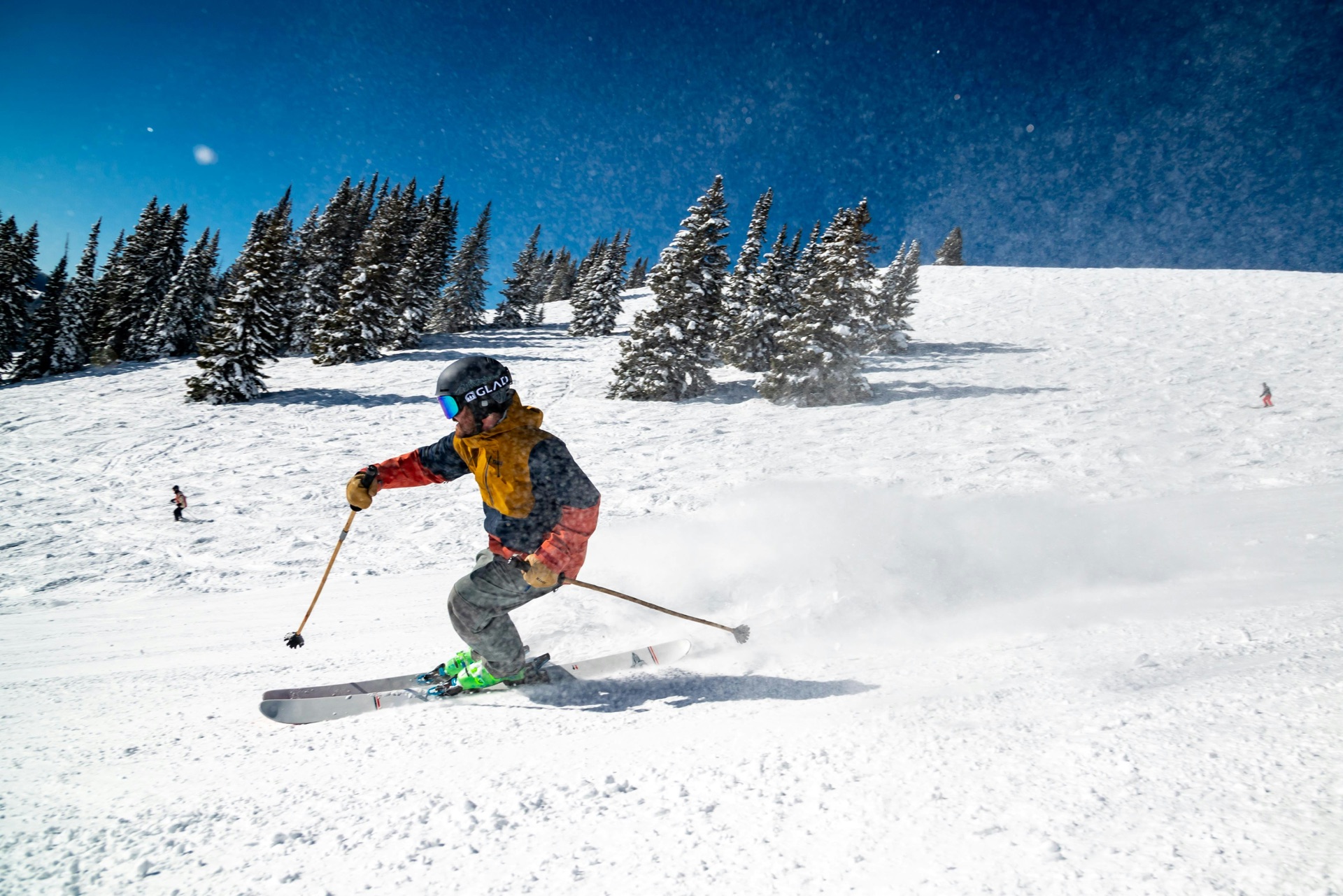
Working toward pain relief in active individuals in Colorado Springs.
When to See a Physical Therapist
You should schedule an appointment if you notice:
- Knee instability
- Repeated knee soreness after skiing
- Pain during squats, lunges, or single-leg activities
- Knee collapse inward
- History of ACL or MCL injuries
- Decreased confidence on the mountain
The earlier you address these issues, the easier it is to correct them.
ACL injuries don’t happen because women are “weaker” or “less skilled.”
They happen because of a combination of movement patterns, biomechanics, and equipment interactions that can and should be trained.
With proper strength training, neuromuscular control, ski-specific programming, and individualized PT guidance, female skiers can dramatically lower their ACL-injury risk and ski stronger than ever.
We help skiiers in Colorado Springs, Manitou Springs, Briargate, Falcon, Rockrimmon, and surrounding areas!
📞 Call us today or 📧 book your evaluation with us to get started with your Physical Therapy in Colorado Springs (719) 285-9670